
Book bans and censorship loom heavier than ever before. In 2024, the American Library Association recorded the challenging of 2,452 unique titles with 4,240 unique titles in 2023.
“This year’s banned books week is especially important because the United States is in the midst of a wave of book censorship; the likes of which we have not seen since the 1950s,” Steve Macek, Professor of Communications and Media Studies, said.
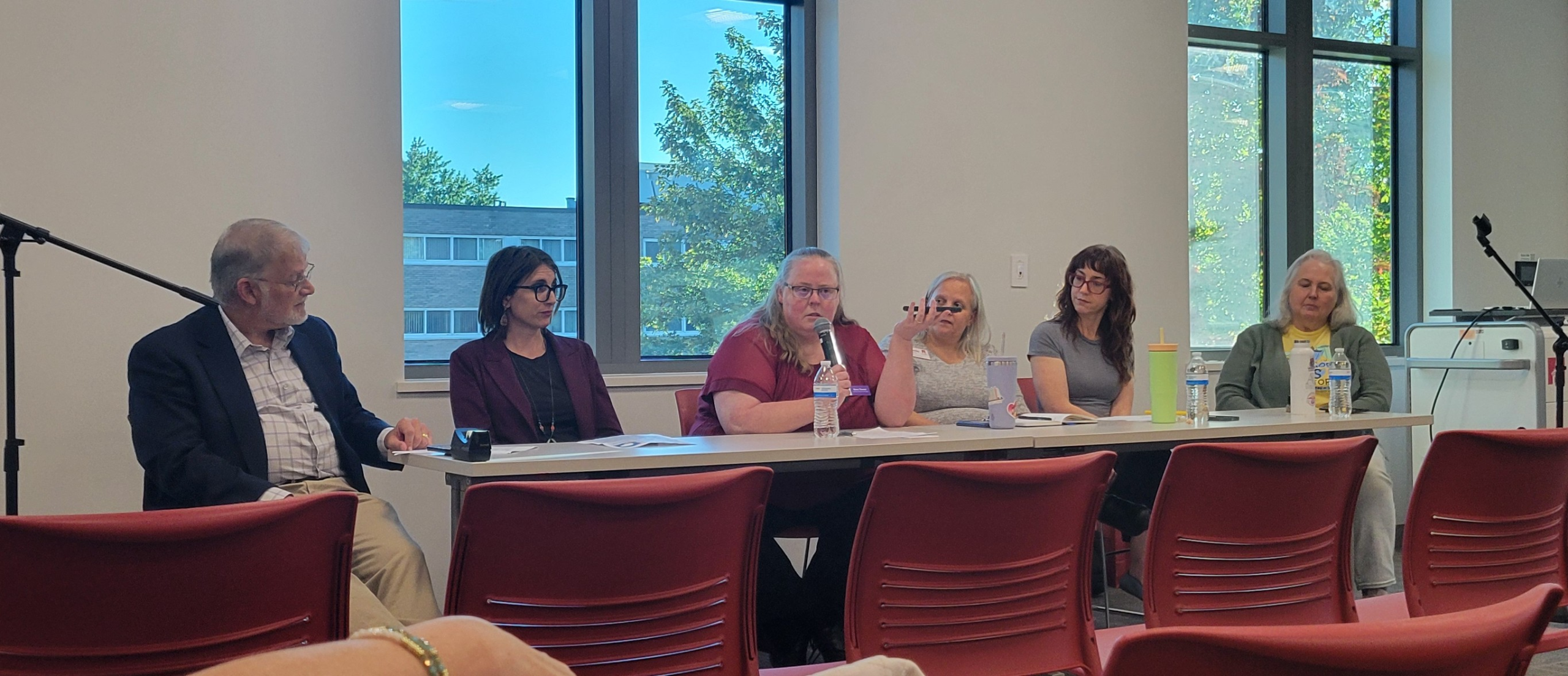
In effort to raise awareness about book challenges, the ALA annually celebrates Banned Book Week. This year, NCC joined in the conversation with an awareness event of their own—Book Bans & the Freedom to Read: A Roundtable Discussion.
The Freedom to Read Roundtable Discussion, held on Oct. 7, was open to everyone, not just the NCC community. Macek led the event as a moderator for the event’s five panelists.
Contributing panelists were Oesterle Director of Library Services Michelle Boule Smith, Naperville Public Library Collection Services Manager Karen Toonen, Sourcebooks representative Audrey Barsella, Anderson’s Bookshop Children’s Book Manager Kathleen March and NCC Associate Professor of English Rebecca Stafford.
The event ran for an hour and a half, which included around an hour of thorough and engaging discussions amongst panelists and about 20 minutes of audience Q&A opportunity.
Starting the conversation
Discussion topics ranged with prevalent points such as why book censorships exist, how they take form and how censorship can be combated.
“I fully believe (book censorship) is about narrative control,” said Barsella. “This is not about protecting children. It has nothing to do with kids, it has nothing to do with safety or what have you, it is fully about narrative and cultural control and power.”
Book bans consistently target items with characters and themes that center around LGBTQ+ and BIPOC topics, the human body and adolescences and the challenging of power structures.
To dig deeper, Macek posed the question of what the panelists believe is driving this censorship wave.
“Fear,” said Boule Smith. “There’s a fear of change. They want to push back that discussion and put it back where it was, but you can’t put the toothpaste back in the tube.”
The start of the event highlighted the existence of soft censorship, which doesn’t always result in bans. Toonen noted that while Naperville Public Library patrons can submit reconsideration forms it doesn’t always lead to a ban. Not only this, but they do not get recorded to the ALA as book challenges. Only challenges that make it to the library board do.
While the audience was reactive throughout the presentation, the Q&A is where their attention shone. The audience became more interactive with questions and comments which gave room for only brief moments of silence.
Out of the questions, one audience member proposed the question of “Is there ever a time where book bans are appropriate?”
Boule Smith then acknowledged that there are instances where materials may need to be restricted. A form of acceptable “censorship” depends on the collection development policy and what it requires. She referred to her time as an academic librarian in Wyoming as reference. Here, the policy was to purchase books with academic integrity to aid the institution’s curriculum needs.
Censorship is nothing to ignore, especially when it affects books. All panelists encouraged attendees to fight back against book censorship by buying, requesting and sharing banned or challenged materials. Toone also encouraged people to attend their local library’s board meetings when there’s challenges taking place.
“You don’t need to stand up,” said Toone. “You just need to show up.”
