
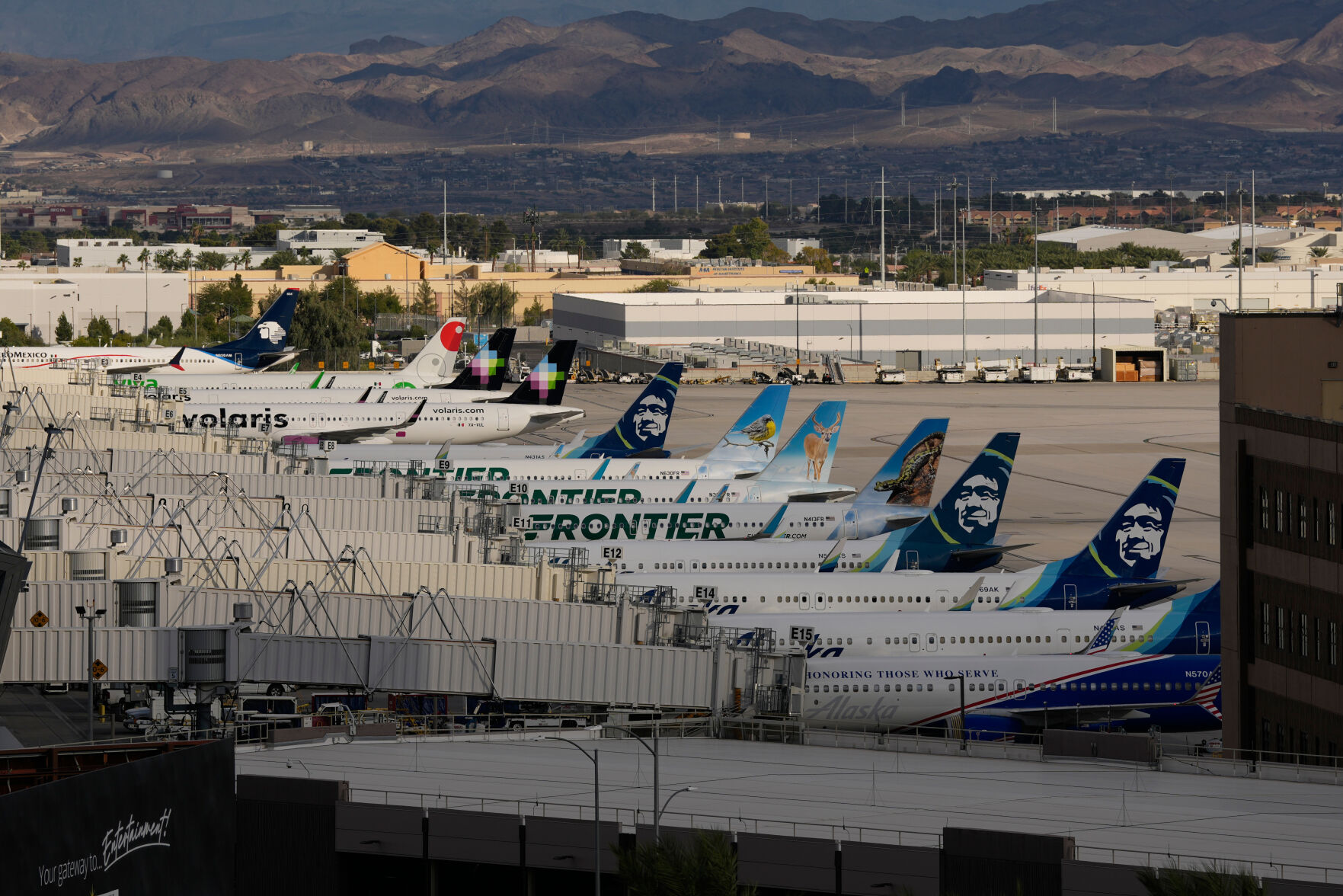
On Friday, Nov. 13, the Federal Aviation Administration (FAA) halted nearly all departures nationwide for almost five hours. Critical lifesaving, law enforcement and military flights were the only exceptions.
The ground stop held flights at their departure airports while air traffic controllers managed aircraft already in the air.
“The FAA was able to handle it. We did it out of an abundance of caution,” Homeland Security Secretary Markwayne Mullin said during a White House briefing.
More than 3,000 flights landed safely during the stoppage.
Flights resumed that evening at 7:15 p.m. Chicago time, but cancellations and delays continued into the weekend at Chicago’s O’Hare and Midway airports. In the aftermath, federal officials are now investigating a routine router installation at a communications site in Arkansas that managed to disrupt national air traffic control.
How the outage happened
FAA contractor L3Harris was working at the FAA’s El Dorado, Arkansas site as part of a larger effort to replace old copper telecommunication lines with fiber ones. During the router installation, a surge of connection requests overwhelmed the equipment.
Air traffic controllers rely on this network for communication and radar information. So, as the feeds and services became unreliable nationwide, the FAA paused departures. This lessened the stressful load for controllers, as they now only had to focus on aircraft already in the air.
Meanwhile, Mullin believes there is no indication of a cyberattack. At the same time, Transportation Secretary Sean Duffy has begun working with investigators to determine why the router installation triggered the network surge.
The fallout in Chicago
By about 5:30 p.m. on Saturday, O’Hare had reported 685 cancellations and 700 delays, according to FlightAware figures reported by WBEZ.
Meanwhile, Midway reported 71 cancellations and 116 delays. Many stranded passengers scrambled to pay for extended hotel stays, rebook flights and find alternative means of travel.
At O’Hare Airport on Saturday morning, the FAA briefly paused incoming United Airlines flights to help the airline get already delayed departures on the way.
Even after the FAA restored the network and lifted the ground stop, airlines still had to get planes and crews back to the airports where they were needed.
“It’s going to be slow,” Duffy told reporters at the White House, warning that departures would resume gradually.
A traveler sits on an empty baggage carousel at Chicago O’Hare International Airport during the Nov. 13 ground stop. (Photo taken by Jim Vondruska/Reuters)
Upgrading a network that’s already in use
The ground stop drew attention to a broader problem. Many of the systems Americans rely on every day still use equipment designed decades ago. Modernizing the telecommunications network requires replacing aging equipment and copper lines without interrupting service. Friday’s outage showed how even a routine upgrade at one site can disrupt air travel across the country.
On Tuesday, Nov. 17, Senate Commerce Committee Democrats asked the FAA and the Department of Transportation for a full account of what caused the failure. Investigators are still working to determine why the router installation overwhelmed the network.
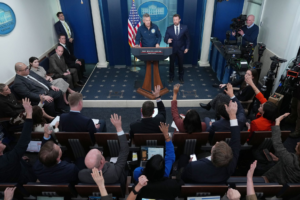
Transportation Secretary Sean Duffy and Homeland Security Secretary Markwayne Mullin address the FAA ground stop at a White House briefing on Nov. 13. (Photo taken by Alex Brandon/AP)
